The Cave Allegory
Πλáτων · Plato, 4th–5th century BCE, Greece
In 4th/5th century Greece, Plato wrote “Republic”, in which he describes the cave allegory, written as a dialogue between Socrates and Plato's brother.
In the cave are prisoners who have spent their entire lives chained in front of a wall. They observe shadows that are projected onto the wall with fire, by sign-bearing figures invisible to the prisoners. To the prisoners, this is all they have seen — the shadows are reality to them.
“Above and behind them a fire is blazing at a distance, and between the fire and the prisoners there is a raised way; and you will see, if you look, a low wall built along the way, like the screen which marionette players have in front of them, over which they show the puppets.”
The Republic, by Plato · translated by B. Jowett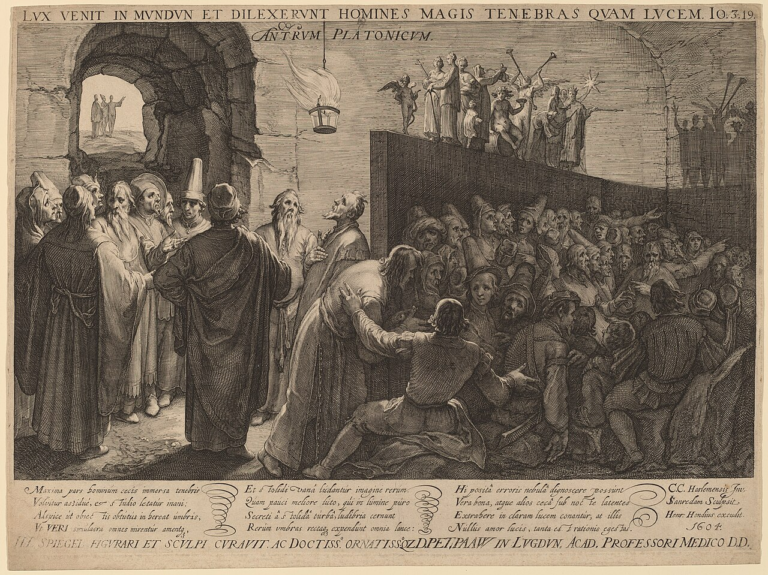
Then, a prisoner is forced out. They face the harshness of the fire with aversion, wanting to go back to the reality they know — the shadows. The prisoner is dragged out and finally witnesses the upper world — in this case, the world we know.
The prisoner's eyes must get used to the overwhelming light of the sun. First, they will only be able to see the shadows, next the reflections of people and objects in the water, then the objects themselves. They watch the starry night and the moon before finally enduring the sunlight. Finally, they can feel the enlightening experience of reality and a newly acquired wisdom.
This prisoner, representing the Philosopher, feels pity for the other prisoners and goes back to reveal the truth and free them. However, the rest of the prisoners reject him. The illuminated prisoner is now blind in the cave, which makes the rest believe that he brings danger.
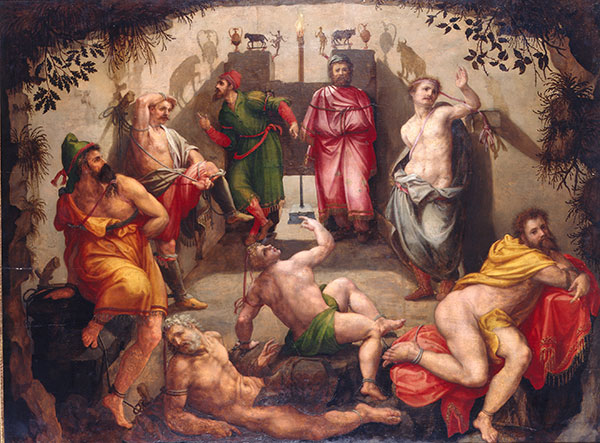
In this allegory, the shadows represent the reality we perceive using our (misleading) senses, and the fire represents the sun. The upper world is the true reality, which Plato considers to be the world of Forms or Ideas.
In Plato's Theory of Forms, our world is merely a poor replica of the elegant and immaterial Ideas.
Today, we can imagine that the realm of Forms is the digital code that sets the variables for our simulated reality.